
Affiliate marketing isn’t slowing down — in fact, it’s exploding in 2025.
Whether you’re a beginner launching your first niche site or a seasoned marketer scaling up revenue streams, the affiliate landscape has shifted big time. From mobile-first strategies to AI-powered content and changing consumer behavior, staying ahead means keeping your finger on the data.
In this post, I’ll break down the most important affiliate marketing statistics for 2025 — covering ROI, conversion rates, traffic sources, income trends, and more. If you’re serious about making affiliate marketing work this year, these numbers will show you exactly where the industry is headed (and how to stay one step ahead).
Let’s dive into the numbers that matter.
Affiliate Marketing Industry Growth in 2025
The affiliate marketing industry isn’t just growing — it’s scaling like never before. If you want to ride the wave, these numbers say it all:
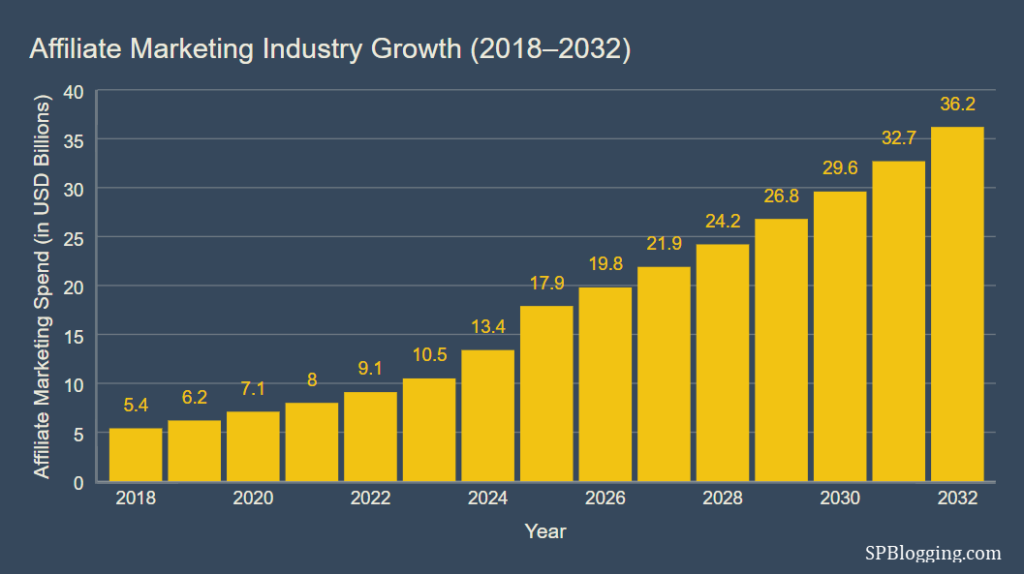
- The global affiliate marketing industry is expected to hit $17.9 billion by the end of 2025.
- Over 81% of brands now use affiliate programs as a core part of their sales strategy.
- Affiliate marketing is growing at a 10.5% annual rate worldwide.
- The U.S. market alone is projected to reach $9.2 billion in affiliate ad spend.
- More than 50% of marketers increased their affiliate marketing budgets going into 2025 — a clear signal of where digital investment is heading.
These affiliate marketing trends in 2025 show one thing: the industry is booming, and it’s not just hype — it’s backed by serious numbers.
Affiliate Marketing ROI and Revenue Statistics
If you’re wondering whether affiliate marketing is worth the effort in 2025, the ROI stats speak for themselves:
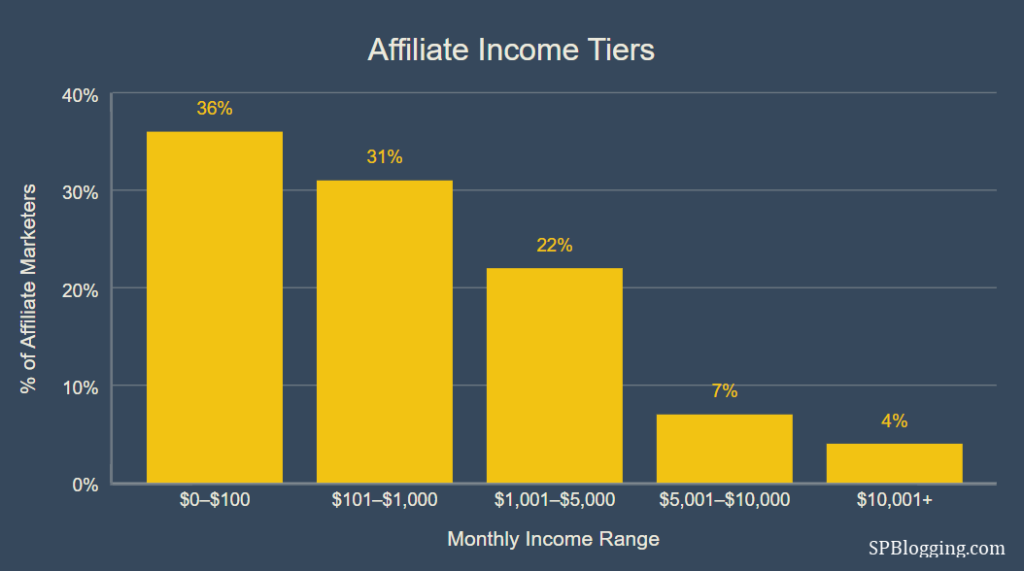
- The average return on investment is $16 for every $1 spent on affiliate campaigns.
- Top-performing affiliate marketers earn over $100,000 per year.
- The average monthly income for active affiliates is $1,470.
- Around 11% of affiliates make more than $5,000 per month.
- High-earning niches like finance, SaaS, and health generate 30–45% higher ROI compared to low-ticket categories.
Affiliate marketing is no longer just passive income — for many, it’s become a serious business model with real revenue potential.
Traffic Sources and Devices in Affiliate Marketing
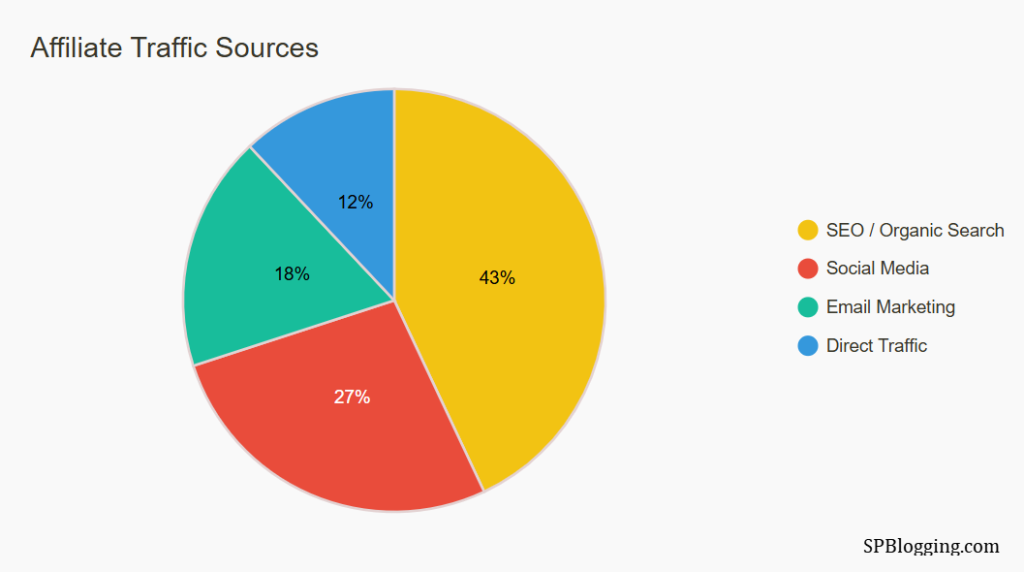
Knowing where your affiliate clicks come from in 2025? Game-changer. Here’s where the traffic is really flowing:
- 67% of all affiliate traffic now comes from mobile devices.
- SEO remains the #1 traffic source, driving 43% of total affiliate clicks.
- Social media platforms like Instagram, YouTube, and TikTok contribute 27% of affiliate traffic.
- Email marketing drives 18% of affiliate conversions, especially for repeat buyers.
- Influencer-driven content grew affiliate traffic by 32% year-over-year.
- Direct traffic (from loyal readers/bookmarks) makes up 12% of affiliate clicks.
In short: mobile-first and search-optimized is the name of the game — and creators who understand their traffic sources are the ones dominating affiliate sales in 2025.
Conversion Rate and User Behavior Stats
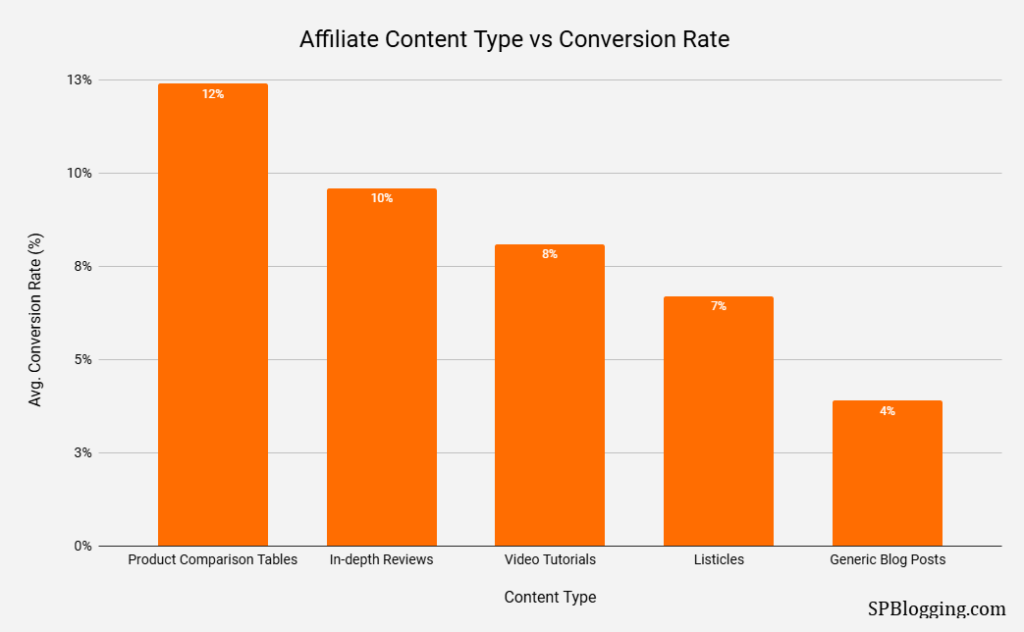
Clicks are nice — but conversions pay the bills. Here’s how affiliate marketing is converting in 2025:
- The average affiliate conversion rate stands at 2.9% across all industries.
- Niche-focused affiliate sites convert 37% higher than general-topic blogs.
- Product review content sees 52% better conversions than generic product mentions.
- Comparison tables on affiliate pages boost conversions by 34% on average.
- Pages using exit-intent popups convert 22% more than those without.
- Affiliate pages with clear CTAs above the fold have a 29% higher click-to-sale ratio.
Understanding how users behave inside the affiliate sales funnel in 2025 is what separates average earnings from breakout revenue.
Affiliate Marketing for Beginners in 2025
Starting out? These beginner-focused stats reveal what it really looks like when you’re just getting into affiliate marketing in 2025:
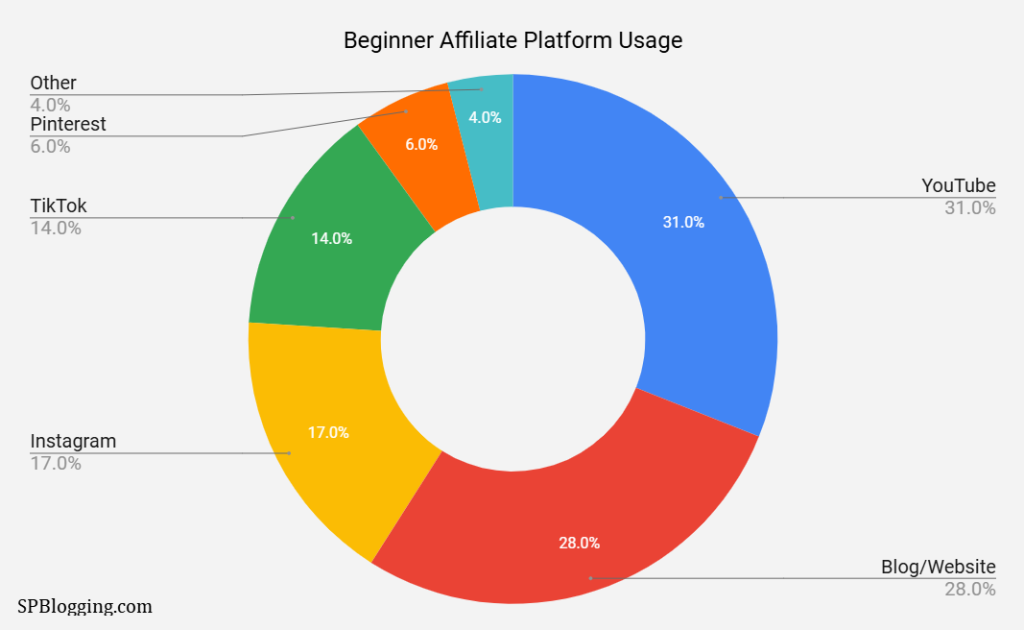
- 53% of new affiliates begin on YouTube or Instagram before launching a website.
- It takes beginners an average of 4 to 6 months to earn their first $100.
- 63% of new affiliate marketers prefer promoting digital products over physical ones.
- The top mistake made by beginners is choosing the wrong niche (41%).
- 32% of beginners now use AI tools (like AI writing or keyword assistants) to create affiliate content.
- 44% of beginners rely on free traffic sources (SEO, social, YouTube) vs. paid ads.
If you’re new to affiliate marketing in 2025, you’re not alone — but knowing these stats gives you a serious head start.
Affiliate Program and Network Statistics
Not all affiliate programs are created equal — and these 2025 stats prove it:
- Amazon Associates still leads the pack with 47% market share among affiliates.
- ShareASale and Impact saw 22% year-over-year growth in active affiliates.
- The average commission rate across affiliate programs is 15–20%.
- Programs offering recurring commissions (e.g., SaaS) grew by 38% in popularity.
- Affiliate programs with 30+ day cookie durations convert 26% better than short-term ones.
- 56% of affiliates now prefer working with private/independent programs over large networks.
Whether you’re looking for high payouts, recurring income, or better conversion tools — choosing the right network matters more than ever in 2025.
Content Performance in Affiliate Marketing
In 2025, the content you publish can make or break your affiliate income. These stats show exactly what’s working now:
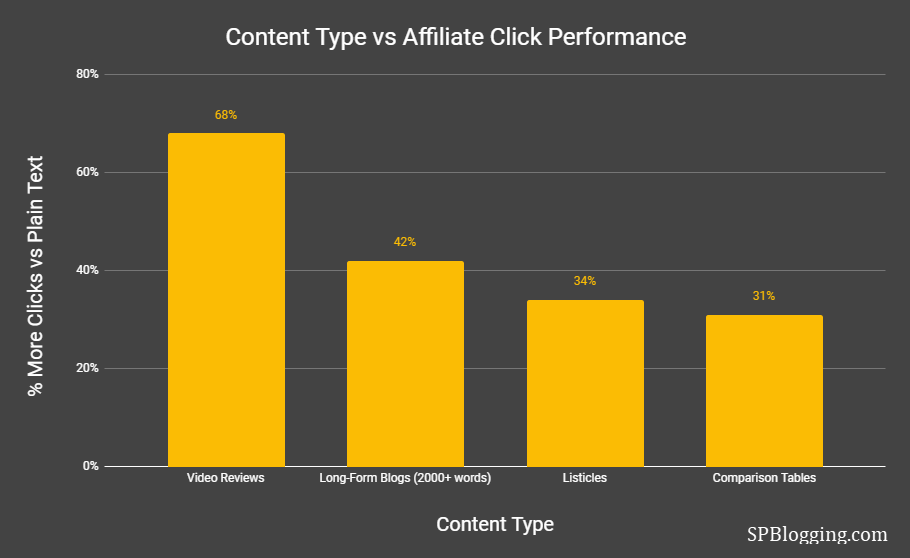
- Long-form content (2,000+ words) drives 72% of all affiliate clicks.
- Blog posts with affiliate links convert 42% better when they exceed 2,000 words.
- Video content (especially YouTube reviews) attracts 68% more clicks than plain-text blogs.
- Listicles with affiliate links get 34% more traffic than standard reviews.
- Affiliate posts that include comparison tables see 31% higher engagement.
- Content optimized for Core Web Vitals ranks 45% better on Google and drives more conversions.
- Pages using FAQs or schema markup increase affiliate click-throughs by 19%.
The best affiliate marketers in 2025 aren’t just publishing content — they’re publishing strategic, high-converting assets that match search intent.
Affiliate Marketing Trends 2025
Here are the biggest affiliate marketing trends shaping 2025 — backed by data, not hype:
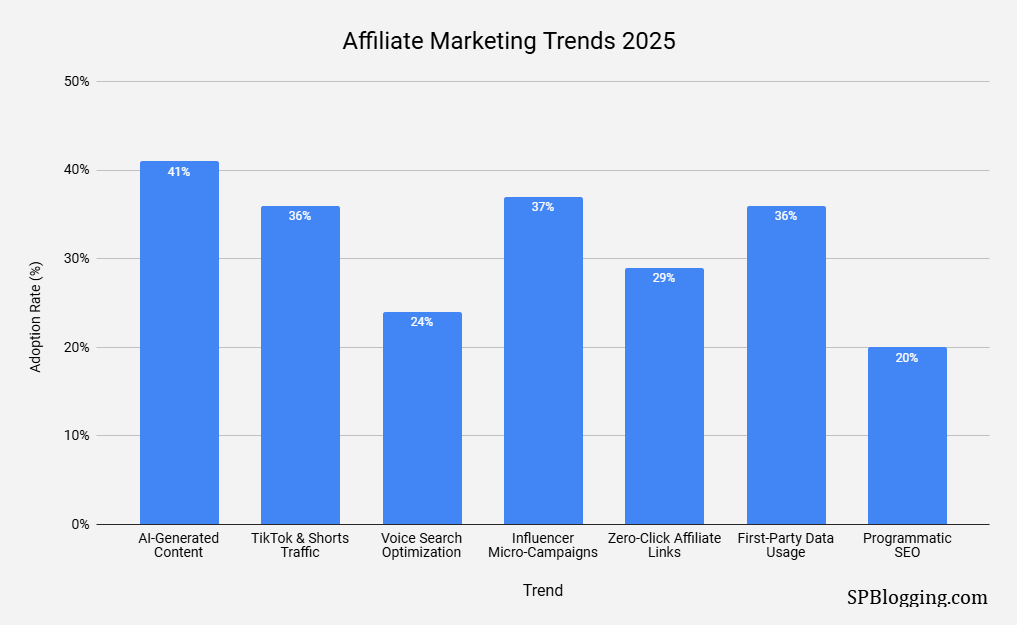
- AI-generated content is used by 41% of affiliates to create faster, SEO-friendly posts.
- Voice search optimization is now a focus for 24% of affiliate sites.
- Micro-influencers are driving 37% higher engagement for affiliate campaigns than larger creators.
- TikTok and YouTube Shorts have become top traffic channels for product-based affiliate content.
- Zero-click content (like native links in social platforms) grew affiliate traffic by 29% year-over-year.
- First-party data strategies are being adopted by 36% of affiliates due to privacy updates.
- Programmatic SEO is being used by 1 in 5 affiliate sites to scale content production.
In short: 2025 is all about smarter content, faster tools, and adapting to how users actually consume and trust recommendations.
FAQs – Affiliate Marketing Statistics 2025
Yes — affiliate marketing in 2025 remains highly profitable. The average ROI is $16 for every $1 spent, and top affiliates earn six figures annually. High-converting niches like finance, SaaS, and health offer even better returns.
The average conversion rate across affiliate websites in 2025 is 2.9%, with niche-focused and review-based content often performing significantly higher — up to 5%+.
Amazon Associates still leads in market share, but networks like ShareASale, Impact, and CJ Affiliate have grown rapidly. Many marketers also prefer private affiliate programs with higher commissions and recurring payouts.
SEO remains the top source of affiliate traffic in 2025, driving 43% of clicks. Social media (especially YouTube and TikTok), email, and influencer collaborations are also major traffic channels.
Beginner affiliates typically take 4–6 months to earn their first $100. However, with smart niche selection and consistent content, many go on to earn $1,000+/month within their first year.
Long-form blog posts, comparison tables, and video reviews perform best. Content that is detailed, optimized for search, and built around real user intent converts significantly better.
Final Take: What These Affiliate Marketing Stats Mean for 2025
Here’s the bottom line:
Affiliate marketing in 2025 is bigger, faster, and more competitive — but also more rewarding than ever. The data is clear:
- ROI is climbing.
- High-quality content wins.
- Mobile and SEO are dominating traffic.
- Niches and strategy matter more than brute force.
If you’re serious about affiliate marketing this year, don’t guess. Let the numbers guide your strategy.
Start with what’s already working — and double down on the trends that are shaping the future.
Sources:
Other Statistics and Trends to check: